

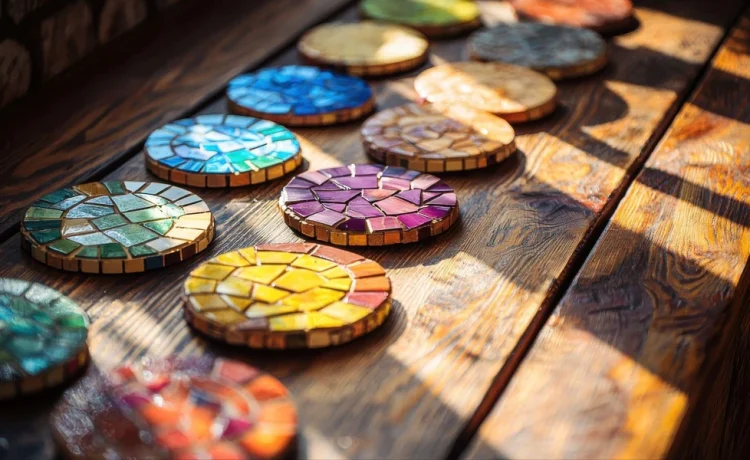
Weekend workshops get booked on appearance, usually from a photograph of a finished piece, and the two most popular options behave quite differently once you are sitting at the table. Mosaic is slow, tactile, and forgiving of inexperience. Resin is faster to produce something striking and considerably less tolerant of error, since once it is poured there is no adjusting it. Neither is harder in any absolute sense, and they suit different people and different occasions. Three considerations usually settle which craft workshop in Singapore suits a given group.
1. How Much Control You Have Once You Have Started
Mosaic work builds up piece by piece. Tiles are positioned, assessed, moved, and repositioned before anything is fixed permanently, which means a participant who is uncertain can keep adjusting until they are satisfied.
Resin behaves in the opposite way. Colours are mixed, the pour happens, and from that point the material does what it does. Pigment movement, bubbles, and the final pattern are influenced rather than controlled, and the result is partly whatever the resin decides. Many people find that unpredictability appealing, and some find it frustrating, particularly anyone who arrived with a specific outcome in mind.
For a group with mixed confidence levels, a mosaic workshop in Singapore tends to produce fewer disappointed participants, since anyone unhappy with how a section looks can simply rearrange it before the adhesive sets rather than living with a pour that went somewhere unexpected.
2. Whether You Take Something Home That Day
This affects how a session feels more than people anticipate. Mosaic pieces typically need grouting and curing, which means a finished item is usually collected later rather than carried out at the end.
Resin requires curing time too, often considerably longer, and finished pieces generally need collecting days later. Some studios run formats where a simpler project is take-home on the day, so it is worth asking specifically rather than assuming either way.
For a group booking a session as an activity before dinner, or for visitors who will not be able to return, collection logistics are worth confirming before booking rather than discovering at the end.
3. Material Handling and Who the Session Suits
The two involve different practical considerations. Mosaic work involves cutting or handling tile pieces with edges, adhesive, and grout, which is manageable and messy in a straightforward way.
Resin involves chemical materials that require ventilation, gloves, and following instructions about handling and curing. Studios running resin sessions manage this properly, and participants should still expect to follow specific precautions rather than treating it as a casual craft. Anyone with skin sensitivities, anyone pregnant, or anyone bringing young children should ask the studio directly about suitability before booking, since the answer depends on the specific materials used and is a question for the studio rather than something to assume.
Matching the Session to the Occasion and the Group
The useful questions are practical. How long is the session, and does that suit the group’s patience? Will people want to leave with something in hand? Is anyone in the group likely to be frustrated by a process they cannot fully control?
For a relaxed afternoon where conversation matters as much as the craft, mosaic’s slower pace suits well. For a group wanting something visually striking from a shorter session, resin delivers that. Asking the studio how long each takes, what the finished piece actually is, and when it can be collected settles most of the decision in one conversation.
Contact Kaleida Studio to discuss which workshop format suits your group’s experience level and the time you have available.